

The Sweet Trap of Paid Advertising
If you're on the fence about whether to throw money at paid advertising or content building in 2026, look first at a real trend that's happening: the industry as a whole is betting more and more of its budget on SEM pago. By 2026, global spending on paid search advertising is expected to soar to $36.23 billion. Businesses are spending an extra 9% per year just to be featured at the top of the search results page for a few seconds.
Investments continue to rise, but how much return does one investment get? The actual numbers silence the optimists: for every dollar spent on SEM pago, you only recoup $2 on average. That means for every $100 you put in, you need to expect it to bring in $200, with your costs. The investment and return just barely break even.
The contradiction is on the table. If the returns are so grudging, why is it that more than $36 billion of capital is still coming in? The answer lies in that very confusing “sweet trap”:
Immediacy.
You create an ad today at 3pm and get your first click at 5pm. The certainty is addictive, especially when you desperately need to see a “splash” - a new store opening, a backlog of inventory, a tight cash flow. In contrast, with SEM orgânico, it can take months before you see your first real visitor.
Controllability.
You can always turn the faucet on and off. Need 50 inquiries tomorrow? Set a budget, adjust your bids, and wait for the data to pour in. It seems a lot more “straightforward” than writing articles, tinkering with code, and building web authority.
But what makes a trap a trap is that its sweet price is hidden and high. When you're used to pressing a switch to get traffic, your business is parasitic on that switch. As soon as budgets tighten, or competitors' bids on the platform begin to rise exponentially, your traffic and business will instantly evaporate without leaving a cloud. Data from the Brazilian marketplace has already sounded the alarm: in the most competitive areas, the CPC (cost per click) for a single click can skyrocket from R$0.50 all the way to R$20+.
This chapter won't rush to tell you who to choose. It's about tearing down the truth: in 2026, making paid advertising your core traffic source just because it's “fast” is a high-risk gamble. Businesses are pouring money into a channel that offers little return, motivated by the fear of “losing immediate visibility” rather than a rational calculation of long-term ROI.
Based on this reality, we need a more sober framework to make choices, rather than being kidnapped by the word “fast”.
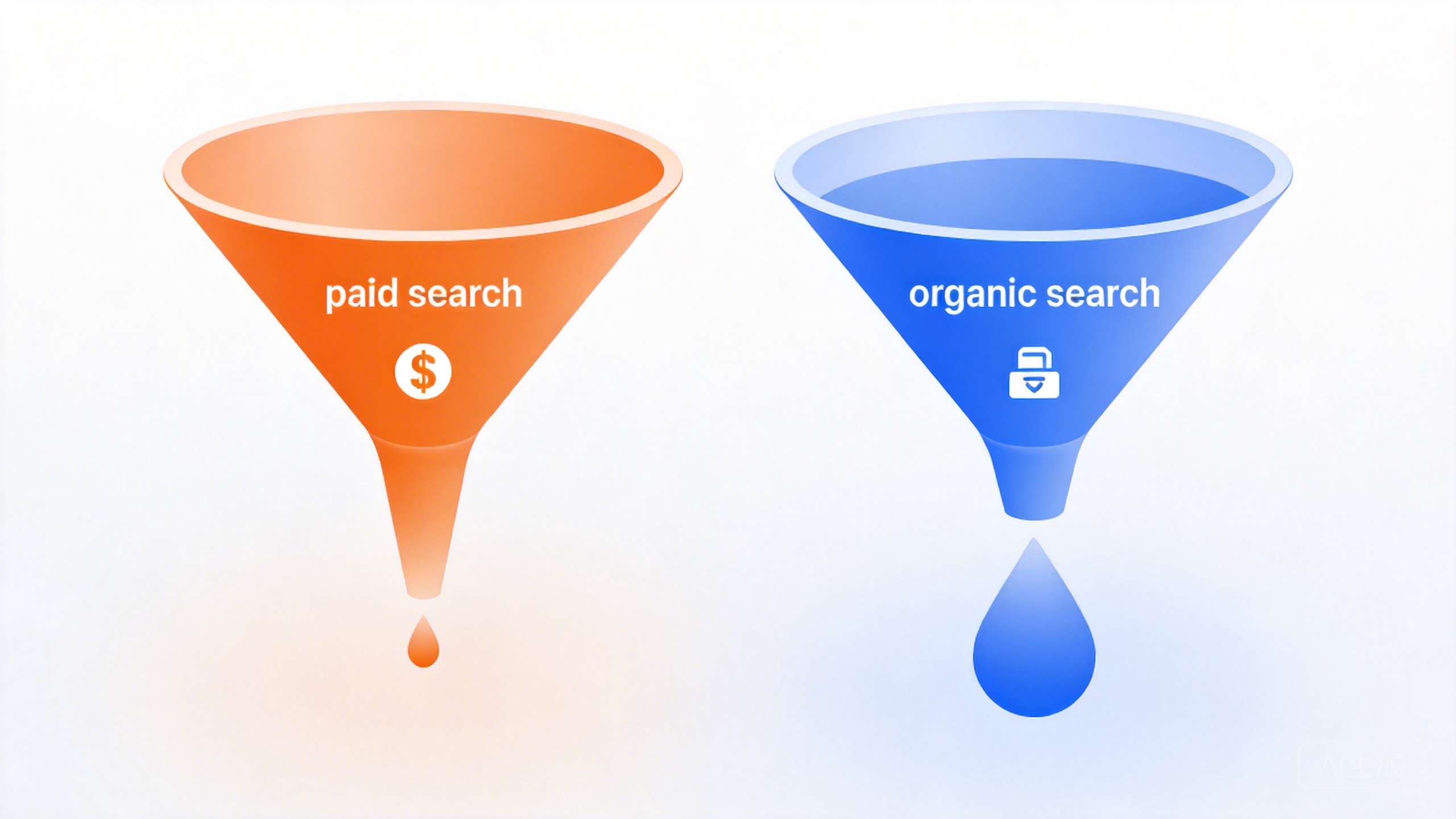
Next, we'll compare the “2x” return of SEM pago with the alternative possibilities of SEM orgânico, down to the last decimal point. As you will see, the real question is not “to advertise or not to advertise”, but “is your business so fragile that you can only rent traffic for a living”.
The real difference between 22x and 2x
The previous chapter has dismantled the rewarding pitfalls of paid advertising. Now let's look at how the other way really performs.
Let's look at the most direct data first: for every dollar invested in SEO, companies get an average of $22 in return. In contrast, PPC's $2 return seems particularly shabby. 11 times the gap, not theoretical projections, but thousands of companies around the world have verified the real ROI.
What does this number mean? Let's say you have an annual marketing budget of $500,000, and all of it goes to PPC to bring back $1 million in revenue; but the same amount goes to SEO, which could theoretically bring back $11 million. That's not to say that you should switch directions immediately - many organizations have been kidnapped by the immediacy of the “$2” and ignored the long-term possibilities of the $22.
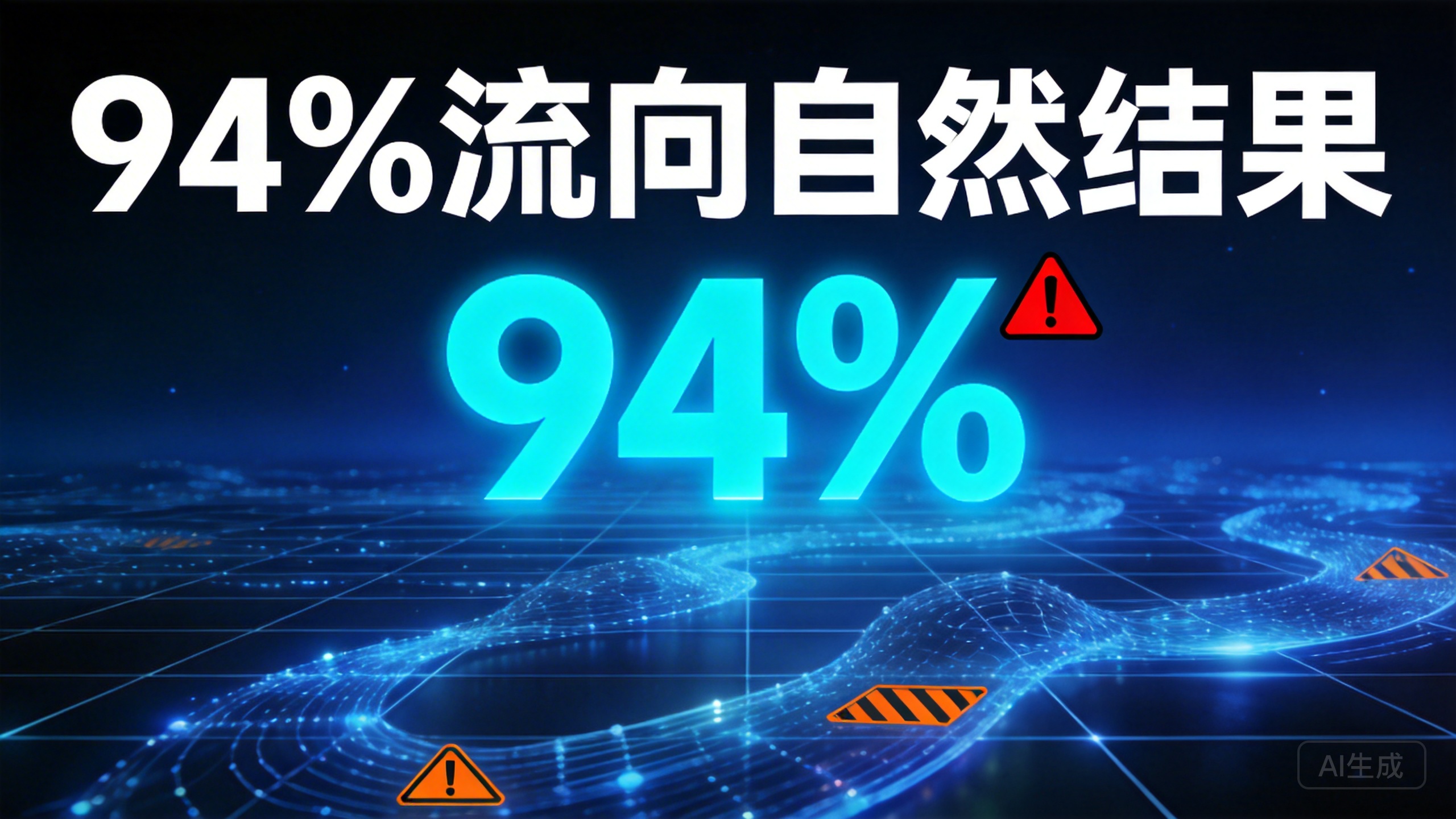
Look again at the traffic distribution. Globally, 53% of search traffic comes from organic results. This means that for more than half of all search behavior, users don't click on ads at all. But on a specific behavioral level, the numbers are even more extreme: 94% of clicks go to natural results, and only 6% click on ad spots.
The behavioral logic behind this 6% is simple: users know it's an ad.75% users don't scroll past the first page of search results, and the first non-ad result they see is often the natural ranking. This explains why the vast majority of clicks still flow to organic results even when the ad space is right at the top.
Industry data further validates the stability of this trend. 48.951 TP6T of website traffic in 2026 came from organic search in the education industry, and 43.251 TP6T in the finance industry. Both of these sectors share common characteristics: high unit price, long decision cycles, and the need for users to build trust. Under these conditions, users are more likely to click on a position that appears to be “earned” rather than “bought”.
But a splash of cold water must be thrown in here: all the figures above are averages. For a brand new website, you may not see any significant organic returns in the first 6 months. It takes time for search engines to recognize you, evaluate you, and give you weight. a $22 ROI is the result of a mature site, not the promise of a new one.
Understanding this undercurrent, the next chapter answers the question: Why do the vast majority of companies still choose to pay for organic returns when they are so much higher? What are the hidden costs of the seemingly “faster” path?
Time is the most insidious cost
If the difference between a $22 and $2 return is so stark, why are companies still tilting the budget scales in favor of the paid end in 2026? The projected increase in global search ad spending to $36.23 billion hides a dimension ignored by most ROI calculations - the cost of time.
Take a look at two very different timelines.SEM pago can bring in traffic within hours of an ad being approved, an immediacy that can be nearly life-saving for cash-flow-strapped businesses. But the leasing attribute of traffic is just as brutal: once the budget is depleted, tráfego pago goes to zero within 24 hours, and your digital presence instantly disappears from the top of the search results. By contrast, SEM orgânico takes 3-6 months to see initial ranking changes, and 6-12 months to hit peak traffic. Yet this traffic doesn't end with invoices, it accumulates like a snowball, and established organic rankings continue to deliver visitors even when subsequent investment is reduced.
The essence of this difference is asset ownership. Organic rankings are digital assets you own, like purchased real estate; paid traffic is a rented bed, billed on a daily basis, not sublettable, and retired on expiration.2026 Competition in the marketplace is amplifying this difference - just look at the CPC numbers for the Brazilian market and you'll see. In mildly competitive industries, the cost per click may be as little as R$0.50; however, in red ocean sectors such as finance and legal, the CPC can soar to over R$20 and rise exponentially with competitor entry. More serious is that the 2026 privacy policy drastic change (no cookie era full landing) will weaken the SEM pago precision targeting ability, means you need to pay a higher customer acquisition premium for the same traffic.
This leads to a practical judgment: if your product life cycle is shorter than 3 months (seasonal clearances, short-term promotions, MVP market validation), a purely pay-to-play strategy is the logical choice - speed is more important than cumulative value. But for businesses with a period of existence of more than a year, betting your budget all on tráfego pago is equivalent to paying rent forever, while competitors are acquiring assets with the same budget.
💡 tipSetting up “CPC melting mechanism“ for paid traffic - when the cost of a single click rises more than 50% or breaks through 15% of the customer unit price within 30 days, regardless of whether the project cycle is full of 3 months or not, the budget of the next month will be shifted to technical SEO optimization immediately. 30% to technical SEO optimization. This is a stop-loss strategy to urgently purchase “digital real estate“ before rents skyrocket, so as to avoid being drained of cash flow by out-of-control bidding costs.
But the cost of time is not the only factor in decision-making. When you pay a premium for “instant visibility“, do you consider how users perceive the position labeled “advertisement“? Behind the click behavior is the trust mechanism at work.
User finger poll results
The 94% flow of clicking behavior to natural outcomes is not just a cost differential, it's a collective vote of the user's trust mechanisms. You calculated the ROI of your time in the previous step, now understand why users make choices so unthinkingly from a human perspective - not because they hate paying for your product, but because they're avoiding the risk of being manipulated.
Ad avoidance is an instinctive response rooted in the psyche of Internet users. No matter how beautiful and attractive your SEM pago material is, the small “Ads” label at the top (on Google) or the “Sponsored” logo in the upper right corner clearly tells the user that the position is purchased and the content is paid for. In 2026, users are more alert to ads and more sensitive to privacy, which directly results in only 6% clicks going to paid ads. This means that even if you completely monopolize ad space for a word, you can theoretically only reach up to that 6% of people. The rest of the market is left to E-E-A-T (Experience, Expertise, Authority, Trust) to decide where it belongs.
The search engine algorithms of 2026 continue to assign more weight to E-E-A-T. It requires that “position” be earned, not rented. A SEM orgânico way, through continuous quality content output, user experience optimization and industry authority to establish the rankings, is the algorithm and the user common recognition of the “position has been obtained”. On the contrary, a bid to grab the advertising space, essentially “leased position”, the algorithm will not give its trust weight, the user also knows its commercial purpose. This cognitive difference directly determines the conversion potential of the two types of traffic.
High-intent users instinctively favor sources that appear to be more authoritative and objective later in their decision-making journey. They click on natural results, subconsciously believing that they are “certified” by the system and appear based on “merit” rather than “bought”. This explains why tráfego orgânico from SEM orgânico tends to have a higher conversion rate and customer lifecycle value (LTV) - the user's trust is built before you even get a click.
Trends are reinforcing this preference. Voice search and AI-powered search interfaces (e.g., Google Search Generation Experience SGE) have a natural tendency to extract and synthesize information from authoritative, trustworthy organic content to answer user questions rather than prioritizing the display of ads. In these emerging search formats, SEM orgânico strategies centered on E-E-A-T have a wider moat of authoritative advantage than in traditional results pages. If your product needs to respond to complex questions or users will rely on voice assistants for initial research, building organic authority is not optional, it's a survival line.
Algorithmic evolution continues to widen the trust gap between “rented” positions (paid ads) and “acquired” positions (organic rankings). The winners of the future search ecosystem will be those content sources that can consistently prove their authenticity, experience and authority.
-- Creative Hut 2026 SEO Report
So when you are targeting products with high unit prices and long decision cycles (e.g. B2B software, professional services, high-end financial products), you have to tilt your budget and efforts towards “trust building”. This doesn't just mean posting a few blogs, but systematically building your autoridade de domínio (domain authority), speaking out in professional communities, acquiring high-quality authoritative backlinks, and showcasing your team's real-world professional experience. The premium users are willing to pay for a SaaS product of a few thousand dollars or a consulting service of a few tens of thousands of dollars depends a lot on the trust they feel from your digital assets. In this scenario, SEM pago can be used as a knock on the door to reach the “hottest” leads who are searching for your brand terms or core products, but the real convite that leads to an order will inevitably happen after the user goes deeper into your official website and reads through your case studies and technical whitepapers! --These are the tráfego orgânico conversion paths.
After understanding the logic of the user's “finger vote”, you have mastered the first principle of making choices: not only to look at ROI figures, but also to look at your target customers in the decision-making process, the scales of trust tilted to which end.
Selection maps for four business types
Data has helped you see the gaps, time has helped you understand the costs, and trust mechanisms have helped you read user psychology. Now you need a real selection map - to lasso your business in and see which way to lean.
B2B High Customer Unit Price: Finance, SaaS, Professional Services
The decision chain in this quadrant is extremely long. A B2B SaaS tool's sourcing decisioninvolves technical evaluation, financial approval, and cross-departmental comparison, with an average cycle time of 30-90 days. Users search, compare whitepapers, and review case studies over and over again before making a final choice. This means they will encounter your site's authoritative content multiple times during the “consideration” phase.
Your branded word ads are necessary to intercept customers who already know you're a competitor. But the real conversions happen after they've read your industry insight articles, downloaded your product comparison guides - all of which, all of which rely on the authority established by SEM orgânico. So the conclusion is clear: you must be organic-based and pay to hit only branded terms.
There is a common pattern of failure to be wary of: some B2B companies spend 80% of their budget on Google Ads, trying to shorten the decision-making cycle with the beauty of the ad material. The result is that the CPC is very high (financial keywords in the Brazilian market CPC often more than R$15), and the conversion rate is very low, because the user simply do not trust a “spend money to buy a position” provider can provide tens of thousands of dollars of professional solutions. Money is spent, but trust is not built.
E-commerce promotions and inventory clearance: apparel, 3C, seasonal items
This scenario is very different. The user's decision cycle is measured in minutes, and the core demands are “buy now” + “the right price”. Your goal is not to build long-term trust, but to stimulate immediate buying action.
Paid advertising is the absolute mainstay here: Google Shopping Ads, dynamic remarketing with Meta Ads, and search ads with seasonal promotions can pull a user into your conversion funnel the moment he creates the intent to buy. But the problem with pure placement is: once the promotion is over and the budget is burned up, the traffic immediately goes to zero. 2026 e-commerce players have to solve this dilemma - use remarketing to capture those users who added purchases but didn't pay, use emails and SMS to recall, and use the membership system to precipitate one-time buyers into repurchase users. Paid placements without remarketing tie-ins will have a churn rate of 60% or more in e-commerce scenarios.
Local services: restaurants, maintenance, housekeeping, local retail
This quadrant is unique in that the user's search intent is strongly geographic. “Which Sichuan restaurant is good nearby” and “what to do with a leaking toilet” are long-tail terms that are far less competitive than pan-industry keywords, but also rely more on local trust.
The Google Business profile (now called Google Perfil de Empresa) is your digital storefront. Photos, hours of operation, customer reviews - the quality of this organic information directly determines whether a user will walk into your store. Complementing this with localized paid ads (Google Ads geo-targeting, local service ads) will give you additional exposure in prime “nearby search” locations. The problem with pure organic in this scenario is that it's not precise enough - a user in São Paulo searching for “restaurants in Rio de Janeiro” isn't your target customer. Purely paid is a waste of money - the natural arrival rate for local services is much higher than online conversions, and investing all your budget in advertising means paying too much for the acquisition cost of each customer that arrives.
Startup MVP validation: product to be validated, requirements to be confirmed
This is the scenario where quick results are needed the most. Your hypothesis has not been validated by the market and any SEO investment could be a sunk cost. For the first 90 days, invest 100% paid budget into Google Ads and Meta Ads to get the first real users with the shortest path.
But that doesn't mean you can ignore organic completely. Simultaneous start SEO means: the basic technical optimization of the official website of the product is done well, and the “about us” and “product features” pages are written according to SEO standards. Even if your product has not been officially launched, these pages will establish a basic index in the search engine. More importantly, when your paid advertising to attract the first batch of users, their search behavior, ask questions, focus, will become your follow-up SEO content production excellent reference data.
Where does your business fall? Self-check with three dimensions
Unit price, decision cycle, brand recognition - these are the three scales that determine where you should lean.
- Unit price is higher than $5,000 and decisions require multiple approvals → Organic is preferred
- Decision-making cycle longer than 2 weeks → Organic bias
- Little to no brand awareness among target customers → Preference for payment (address awareness first)
On the contrary, the customer unit price is less than 500 yuan, the decision-making cycle is less than 48 hours, the brand has a certain reputation → you can increase the proportion of payment.
This is just an initial framework for judgment. The complexity of the real business world is that most businesses don t fall perfectly into one quadrant, but are spread out on the boundaries of the quadrants. The next chapter tackles the question: when you find yourself in a business that needs to be both organic and paid, what's the right combination to skyrocket conversions 220%.
How Integration Hits Can Skyrocket Conversions 220%
When you found yourself stuck at the intersection of two quadrants in the self-test in Chapter 5-needing both paid immediate traffic and craving organic, long-term assets-the real solution isn't either/or, it's to let them feed off of each other.Lab Growth released case data in the case data released in early 2026 showed that strategically integrated execution of SEM pago and SEM orgânico boosted conversão by up to 2,201 TP6T. it's not simply a matter of stacking budgets, it's about letting the two kinds of tráfego form a closed loop of data.
Tactic #1: Think of Paid Ads as Keyword Labs
Your SEM pago account produces real search term reports every day - what terms users actually type in, whether they convert after clicking, and how long they stay. This data is the golden map for SEM orgânico content production. Specifically, instead of guessing “what users might care about,“ you can test a set of long-tail terms with R$500 Google Ads. The actual data is: if the conversão of a word is more than 3% and the CPC is lower than the industry average, this is the topic that you should immediately invest SEO resources to produce. A SaaS organization used this approach to turn a paid validation of the topic “Cloud CRM Security Compliance“ into an in-depth whitepaper, and within three months the natural rankings for the keyword went from page 5 to #1 without having to pay for ads for the term.
Strategy 2: Double Occupancy - Establishing a Double Line of Defense in Prime Positions
For proven high-converting paid terms, your goal should be to occupy both the “leased position“ of the ad and the “earned position“ of the natural results. When a user searches for “enterprise project management tools“, the probability of clicking on your Google Ads is significantly higher if they see both your Google Ads on the first screen and your organic case study below. 2026 search behavior research shows that this double occupancy can increase brand awareness by more than 40%. Because users subconsciously believe that “this brand is willing to invest (advertising), but also has real authority (natural ranking). However, it should be executed with content differentiation in mind: ad copy emphasizes promotions and immediate action, while natural content emphasizes in-depth comparisons and usage scenarios.
Tactic 3: Capture ORGANIC visitors with remarketing to lower overall CPAs
Visitors to tráfego orgânico are usually in the information-gathering phase, and they don't buy on their first visit. If you set up remarketing lists in Google Ads to capture users who enter through natural search, browse for more than 2 minutes but don't convert, your SEM pago budget can accurately track these high-intent people. This means you're no longer paying high CPCs for “cold traffic,“ but instead you're repeatedly reaching users who have already established initial trust through your organic content at a low remarketing cost. A Brazilian fintech company that adopted this strategy saw its overall CPA drop from R$45 to R$19, as the CPC of remarketing is typically only 30% of new customer acquisition.
⚠️ take note of: Brand terms are the most neglected cannibalization disaster areas - if your brand terms have been firmly in the first place in natural search, unless competitors are bidding high to seize, or continue to put high amounts of real to their own popularity to repeat the payment. It is recommended that you shift your brand term budget to long-tail demand terms that have not yet established organic rankings.
The biggest pitfall of consolidation is CANNIBALIZATION - continuing to buy ads for keywords for which you already have #1-3 natural rankings. The reality is that when natural rankings are already in the top 3 on the first screen, continuing to advertise for that keyword will result in approximately 40% clicks from organic traffic that should have been captured for free. The right approach is to audit the “natural ranking vs paid keywords“ overlap table once a month: natural rankings of the first 3 words, gradually reduce the bid or pause; natural rankings in the second page and beyond the word, keep paid to occupy. This ensures that every penny of your SEM pago budget is spent on the “battlegrounds not yet covered organically“, rather than on your own assets.
The common logic of these three strategies is to break down the departmental wall between SEM pago and SEM orgânico. The former is responsible for quick validation and immediate placeholders, the latter for long-term asset building, and data flows freely between the two. When you master this integration rhythm, 220%'s conversão lift is no longer a theoretical number, but a replicable execution result. Now all you need is a concrete timeline - to know what metrics to check tomorrow, what ratios to adjust on day 30, and what decisions to make on day 90.
2026 90-day start-up list
The 220% conversão boost figure is tantalizing enough, but if you don't know exactly what you're going to do starting at 9am tomorrow morning, that number is just an abstract promise. Now move to the executive level and I'll give you a start-up checklist covering the first 90 days of 2026 - each step comes with a clear budget percentage, checkpoints and stop-loss lines. This is not a theoretical proposal, but a timetable to move forward on a week-by-week basis.
Days 1-30: Foundation Construction and Rapid Verification
This is a month where you need to accomplish two seemingly contradictory things at the same time: launching SEM orgânico infrastructure projects that take time to sink in, and getting user behavior data that can be analyzed right away. The budget allocation is straightforward: 80% to throw at SEM pago, 20% for content creation and technical SEO.
Specifically, the first week of work was a synchronization of the technical audit and the construction of paid accounts. The technical audit is not “just check it“, but must output a clear Fix list: whether the site speed is loaded within 3 seconds, whether the mobile terminal is adapted, whether the URL structure is standardized. This list will guide the optimization throughout the 90 days. The goal of the paid account at this point is not low CPA, but “data acquisition“ - test at least 50 high purchase intent keywords with a CPC ranging from R$0.50 to R$6.00 (depending on your industry). Record real search term reports, click-through rates and page dwell times. Remember, the paid budget at this stage is essentially a keyword research fee.
- Perform a comprehensive technical SEO audit, outputting a clear Fix list containing issues such as site loading speed, mobile adaption, URL structure, etc.
- Build a Google Ads paid account and set up tracking conversions
- Place at least 50 high purchase intent keywords for testing, with a budget targeting “Data Acquisition”.”
- Record and analyze search term reports, click-through rates and user time-on-page data for paid ads
- Fix the 2-3 highest prioritized technical issues based on the Technical Audit Fix list
- Identify keywords with higher conversion rates than industry benchmarks and high bounce rates based on trends in the first two weeks of paid ad data
- Utilizing the 20% budget, launch production of the first piece of in-depth content on a topic derived from the highest converting keywords that have been verified in the paid data
- Organize and keep a verified list of 15-20 high-converting paid keywords for subsequent content production
The second week begins with fixing the 2-3 highest-priority technical issues based on the audit results, while observing data trends in paid advertising. At this point the data on the paid side is starting to reveal what users really want: which words are conversão over industry benchmarks (e.g., 1.5%), and which words have more clicks but high bounce rates. In weeks three and four, you'll use that 20% budget to launch the production of your first piece of high-potential content - on the topic of the very word with the highest conversão in the paid data. This post isn't about ranking fast, it's about stocking up on ammo for the main SEO battle that starts on day 31.
Days 31-60: Data-driven content infrastructure
The validation of the paid channels is starting to show. On day 31, you should already have a list of at least 15-20 verified paid terms. Now your task is to turn them into SEM orgânico assets. Budget ratios start to adjust dynamically at this point: content and outbound link building should be invested more than paid spend.
This means that you need to produce 2-3 in-depth pieces of content per week, each of which precisely corresponds to a validated, high-converting search intent. If the paid data shows that the conversion cost of “enterprise project management software offer“ is reasonable, your content should be a detailed comparison review with pricing model, hidden cost analysis, and fully optimized technical SEO (title tags, H1, image ALT, etc. are all in place). At the same time, initiate a small-scale outbound link building by acquiring at least 10-15 high-quality backlinks from relevant industry blogs or resource sites, this is to accelerate the building of your initial autoridade de domínio.
🔑 critical: 2026 search intent judgment can not only look at the literal meaning of the keywords, combined with paid data in the user's actual post-click behavior - users searching for “project management tools offer“ if the page stays short, the bounce rate is high, suggesting that the intention may be to “price comparison“ rather than “purchase“, the content should focus on comparative analysis rather than product recommendation.
Paid advertising can't be stopped in the meantime, but the role changes from “data collection“ to “traffic support“. You need to make sure that your site's business-critical traffic doesn't drop off a cliff, and start implementing the “double occupancy“ strategy mentioned in Chapter 6. Continue to advertise for high-potential terms that already produce in-depth content, but with ad copy that focuses on “download a quote“ or “schedule a demo“ and natural content that provides “in-depth reviews“. "The two form the top and bottom of the conversion funnel. By the end of day 60, you should be able to observe at least 2-3 of your target keywords ranking organically on page 2 of Google search results.
Days 61-90: Optimization and Scale-up
The last month is a critical point for a strategic shift in focus. If executed well, a portion of your ORGANIC rankings begin to bring in steady traffic. At this point the budget should be adjusted to 60% content and SEO optimization with 40% paid. At least half of the paid 40% should be spent on remarketing to ORGANIC visitors.
You'll want to do a full “cost-optimization migration“: for keywords where the paid CPC is consistently higher than the industry average of 50%, but your content is already getting steady organic traffic (e.g., more than 10 visits per day), gradually lower your paid bids. The goal is to allow natural traffic to gradually replace this expensive paid traffic. Check that your remarketing lists have been accessed correctly - those coming from natural channels and browsing for more than 2 minutes should be highlighted, and their CPA should theoretically be much lower than new visitors.
Now discuss some of the real-life obstacles you may encounter.
Special war preparations for 2026
You're not dealing with the digital landscape of 2022. There are two changes you must prepare for ahead of time this year: privacy policies and user behavior.
The cookie-free era means that it's harder to pinpoint an audience of “25-34 year old males interested in tech“ than it used to be. By the end of 2026, third-party data will be largely obsolete. That means you have to start investing in first-party data collection within the 90-day launch period. The easy way: Embed a value exchange in your content (e.g., “download the full industry report” in exchange for a company email address) and build up your own audience database. This database will be the final card in the deck for future remarketing and precision advertising.
In addition, E-E-A-T will only be weighted more heavily in the algorithm. Your content can't just be an aggregation of information, it must demonstrate true professional experience and AUTHORITY. if you don't have an in-house industry expert, consider partnering with an outside consultant for bylines or publishing deeply researched reports of raw data. It's not optional, it's the gateway to the first page of search results in 2026.
Stop Loss Lines: When to Recognize a Strategy Needs Adjustment
This 90-day plan is not a guarantee of success, but an experiment in controlled risk. You need to set clear stop-loss lines to avoid sunk costs.
The first key stopping point is on day 30: If the CPA of the paid ads has been higher than your product's guest price of 50% for two weeks in a row, and no high-value keyword conversão exceeds 1%, then there may be a problem with your initial audience assumptions or product market fit. Instead of doubling down on your bets at this point, you should pause your payments and re-examine your user profile.
The more important consolidated stopping point is on day 90. You need to check two hard indicators: first, whether the paid CPA is still more than 30% of the price of the guest unit and no downward trend; second, whether any of the core keywords organic rankings increased by more than 10 positions (for example, from the 50th to the top 40). If the answer to both is “no“, it means that your integration strategy in the implementation of the level of fundamental deviation - may be the quality of the content is not up to standard, or the construction of external links is ineffective. This is not a question of insufficient investment, but the wrong direction, you need to go back to Chapter 5 to re-examine the “four types of business selection map“, to determine whether you have chosen the wrong battlefield from the beginning.
The value of an action list is not in guaranteeing success, but in turning uncertain marketing into a science experiment with a timeline, checkpoints, and clear paths back. Now that you have this timeline, the pressure to make decisions shifts from “should I do it“ to “follow the plan“. Tomorrow morning at 9am, the first thing you do is open Google Search Console and Google Ads and start day 1.
